Dogs and cats are capable of cleaning themselves but to a certain degree that they would need help to be completely groomed (1). Grooming is simply the regular cleaning of pets to keep them comfortable and healthy thus fundamental to the welfare of companion animals (2; 3; 1). During a grooming procedure, every area of the dog is checked and cleaned thus allowing you to generally examine the body and skin for the presence of lumps, parasites, wounds, and other abnormalities – a great way to identify potential medical problems before they become serious (4). Grooming will also help you build a rapport, trust, and bond with your animal companion while keeping them good looking and feeling healthy (5; 4).
Image source: caninetofive.com
Essential grooming routine and its importance are as follows:
Brushing fur removes dirt and dead hair and skin cells preventing matting, stimulates blood circulation, and distributes natural oils throughout the coat limiting the chances of fleas and other pests residing (4).
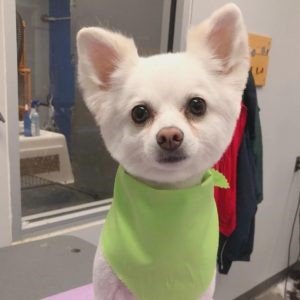
Clipping or trimming hair prevents it also from matting. Mats on affected areas can contribute to and cause discomfort and medical conditions, such as skin irritation and infection, recurrent or chronic ear and ocular infections and disease, anal soiling and obstruction, fecal constipation and impaction, urine scalding, and parasitic infestations (6; 7; 8; 9). Overly long hair that can be twisted into knots (5). This can encircle the lower limb(s) and constrict blood flow and lymphatic drainage resulting in soft tissue death, bone injury, and potentially amputation of the affected limb (7; 10).
Severely matted dog transformation. Image source: people.com
Trimming claws may not be necessary for active, outdoor dogs, but this is particularly important in dogs staying indoors as their nails may overgrow. Nails do not stop growing in dogs, much like human fingernails. If left untrimmed, claws may grow in a circular pattern and penetrate the paw pads on the underside of the feet, causing wounds (4; 3). Long, curled nails have elongated quicks that can crack, split and break off dangerously short, exposing the blood vessel. These will be painful, making it difficult for them to walk on hard surfaces as the nail will get pushed back into the nail bed (5; 10). Trimming claws thus prevents paw injuries, deformities and discomforts causing lameness, even permanent joint or bone problems over time, affecting their gait and posture (5; 10).
Nails overgrown and ingrown into the pads. Image source: somersetlive.co.uk
Ear cleaning allows you to inspect if there are unusual odors and inflammation, which can indicate the presence of infection or mites (11).
Tear stain removal. If your dog is prone to eye discharge, it is important to wipe them daily to avoid them to caked onto a dog’s skin if left for a long period. Use a washcloth dampened with warm water or an eye cleaning solution to wipe the area. Trimming the hair close around the eye area helps prevent the accumulation of tears.
Toothbrushing is essential to prevent gum disease and tooth decay by removing plaques, a sticky film made of bacteria formed on teeth that in time can harden into tartar (12).
Dog with a buildup plaque on its teeth. Image source: bluecross.org.uk
Bathing removes odor, dirt and parasites, soften coat, reduces shedding, moisturizes skin and helps with allergy making them pleasant to be around. The frequency of bathing in dogs depends on their activity, environment, and type of coat (13).
Image source: petprofessional.com Australian Dog Grooming School
Anal gland are little sacs just inside your dog’s anus that express naturally when a bowel movement is passed, or when your dog gets frightened. Problems arise when these glands become blocked, causing your dog pain or infection, occasionally you may notice them scooting, straining, smelling fishy, or licking. To prevent this, anal gland is cleaned by simply expressing them externally by squeezing or applying pressure from the outside to push the fluid out of the anal glands (10).
Removing ticks and fleas is important to prevent serious infection from the pathogens they carry (3).
COMPLICATIONS OF GROOMING
Groomers work with sharp tools on unpredictably, moving targets so even if animal safety stays at the top of your mind and you always take necessary caution, dog grooming activities still pose potential risks for accidents and injuries (14; 3; 15).
Below are some of the most common complications that can occur in grooming:
Skin irritation develops due to repetitive brushing or when utilizing a dull or overheated blade on the electric clippers on the same area where there are tangles, matting, or pelted long hair; when an area is clipped very close to the skin can become sore or cause outright burns or abrasions after grooming. This is most likely to occur around sensitive or thinner skin areas like the face, flanks, beneath the paws and tail, genitals, and anus, once matting is removed on the area (10; 16). Hair dryers, even set on low heat, may burn your dog’s skin and irritate it (16). This can also be terrifying due to too much heat and noise (14; 5).
In other cases, there may be more diffuse skin irritation due to overly harsh shampoos or conditioners, shampoo or conditioner that hasn’t been properly rinsed away, and bathing too frequently (10; 15). Bathing dogs more often than truly necessary, will strip dog’s coat natural oils, making it dry and more prone to dandruff, frizzies, and mats (13).
Irritation can go unnoticed, until inflammation or skin lesions develop, and dog starting to lick, and scratch to soothe themselves (10). It can sometimes be confused for an infection or parasite infestation, such as fleas (16).
Skin irritation after grooming. Image source: zenbarks.com.
Eye irritation may occur if some of the grooming products got in their eyes; if their eyes got hit with any grooming tool; or when tear stains are removed leaving the area sore and itchy (5; 10).
Ears become irritated after ear plucking. Ear plucking is when a groomer pulls the hair out of a dog’s ears as excessive hair normally blocks the flow of air that keeps the ear canal dry, traps dirt, and causes matting. Irritation and discomfort can come from this process when attempting to pluck hair that may not be ready to come out yet or when plucked around sensitive areas (10). This is a disputable topic in dog grooming, as some dog groomers claim that they see more ear infections in dogs that get their ears routinely plucked, while others claim the opposite. Whether to pluck the dog’s ears or not will depend on their individual circumstances. It still important to remind dog owners that ongoing ear care is important for pets that suffer from ear infections (15).
Hematomas also commonly occur in a dog’s ear when a dog has tight matted hair, the blood flow is restricted to that area. When that matted hair is removed, blood rushes back to the area quickly, which can cause a large blood blister called a hematoma (10).
Scrapes, nicks, and cuts. Nicks are small cuts made by scissors or clippers that can occur for a variety of reasons; when a dog is very jumpy or wiggly and it is impossible to prevent the dog from moving in between cuts; if the skin is very thin especially in senior dogs; if a dog has very tight matting or is pelted, develop very close to the skin surface or those that built on thinner skin under armpits or between toe webbing, that even groomers find it difficult to determine where the hair ends and the skin begins; or if there are hidden wounds or scabs, moles, or warts, dew claws that hang loosely in the medial part of the dog’s legs, skin folds inside ear flap or on the body or dogs showing their tongue when they are happy (15; 10; 5; 17).
Quicked nails. Cutting a nail too short and brief can cause them to bleed since each nail contains a blood vessel – the quick. Longer blood vessels typically occur in the nail when they’ve had a long time to grow thus overgrown nails make it easier to be quicked (5; 10).
Slips and Falls. These accidents are sometimes a result of a canine not being correctly restrained on a grooming desk, not utilizing the right sort of grooming desk, and a slippery grooming desk floor.
Tick removal. Improper removal like when squeezing and tearing the tick during the process can raise the chances of infection for both you and your pet.
Skin infection. Dogs are susceptible to all types of infections especially bacteria and yeast since they thrive in most areas of poorly groomed, or in moist areas (e.g., ears, foot pads) of animals (5). Yeast inside the ear canal can be itchy, causing the dog to scratch excessively. Dog uses its feet to scratch inside its ears to relieve the itch, causing the yeast to spread to its feet. Once on its feet, yeast can spread to other areas of the body, leading to disseminated infection. Yeast can make dog grooming difficult because it forms flaky and sticky skin that clippers can catch on, making a dog uncomfortable. Skin that is flared up from scratch, whether it’s from yeast, dry skin, or fleas, can create scabby areas which will cause more irritation from shampoo when bathing. Aside from yeast, ringworm is a relatively common skin infection caused by dermatophytes, spread by contact with the infected area but is usually mild and self-limiting (10).
Infectious diseases can also be acquired in grooming facilities, these include Rabies, Kennel cough, Canine Influenza, Canine Parvovirus, Canine Distemper, especially if dogs are not vaccinated or exposed to infected animals (18).
Overheating usually happens in dogs that are sensitive to heat like the Newfoundland. This breed requires quite a lot of grooming, standing for hours on a grooming desk will be exhausting them and on their joints. When Newfies are getting scorching or drained, they may usually pant (19).
Fear, anxiety, and stress. Signs of fear and stress include panting, dilated pupils or “whale eye”, ears pulled back, yawning, tail tucking, crouching, lying down, whining, barking, shaking, pacing, lip licking, moving away, trying to escape, looking in all directions, and, growling. Extreme stress increases the amount of cortisol, serotonin, and other neurotransmitters that trigger the fight or flight mechanism making dogs very difficult to groom. This also weakens their immune system making them more prone to diseases (20).
FIRST AID TREATMENT
The key in the event of any accident, injury or emergency is to act quickly while staying calm to effectively deescalate the situation (3; 17). Besides taking precautions, the best thing you can do is to be aware of the common injuries that could happen to anticipate a worst-case scenario, and be prepared with knowledge on what to do. It is essential to have the appropriate first aid kit available for pets and people (15). Always have a disinfectant, like hydrogen peroxide and povidone iodine, some gauze, bandages and band aids, antibiotic spray, or cream. Of course, all injuries should also be looked at by a vet or a doctor, but cleaning the wound and treating it yourself is a good first step (3).
Here are the ways to manage complications of grooming:
Quicked nails. Styptic powder is the most common and efficient way to stop a dog’s nail from bleeding. This can also be used to treat minor cuts as well (21; 15). Corn starch can also be used to saturate the bleeding (3).
Nicked skin. Groomers will apply pressure till the bleeding stops. This generally happens pre-bathing so by the time the dog is washed and dried the bleeding is likely to have stopped. Cut skin can also be washed with saline to clean the wound, and dabbed with an antibiotic ointment. Nicked ear will heal quickly, as long as it is kept clean (15).
Cut dew claws will likely require a bandage to apply pressure and stop the bleeding and a veterinary prescribed antibiotic to ensure it won’t get infected (21).
Skin Irritation. Discomfort from irritation, can be reduced in the short-run with a room-temperature bath and oatmeal dog shampoo, or patting the affected area with a moist, cool cloth until it is dry. Coconut oil has an antibacterial properties and omega 3 fatty acid, applying it will promote wounds to heal faster, as it moisturizes skin and soothes irritation (5). Ointments normally meant for allergies or insect bites available at pet stores can also be applied (16). Antibiotic ointment will be prescribed to soothe it and prevent infection. If the dog is particularly interested in agitating the rash, you can also advise the owner to use an Elizabethan collar (15).
Skin infection. Yeast and ringworm infection are easily treated with OTC antifungal drops, sprays, ointments or creams, and shampoos (22; 18). Topical ingredients that are effective in fungal infection include chlorhexidine, miconazole, and ketoconazole. Vinegar rinses may be beneficial as it helps to change the pH of the skin, making it less favorable for yeast. The proper dilution is important to avoid irritation (22).
Eye irritation and eye discharge. If the discharge is too tight to the skin, or too much mass spread around the eye area, it can cause discomfort, and even house infections due to moisture getting locked in at the root (10). Before your pet scratches and makes it worse, wrapping a warm cloth soaked in salty water around your dog’s head, concealing their eyes will ease the irritation (5). Discharge can also be soaked off in the tub by lathering up the area with warm water and massaging out, or combing out, the discharge with a small flea comb.
Muscle sore or lameness after grooming due to physical restraint. Apply ice packs to the area for 15 minutes twice daily, if the dog has swelling associated with a sprain, bruise or tendonitis. Place your dog in a tub and swirl water around the leg, or spray the leg with a hose for 15 minutes twice daily as flowing water improves circulation, reduces swelling, and promotes healing. Lame dogs should also be confined and restrict their activity (23).
Signs that the animal may need emergency, veterinary care include (5; 10; 15):
Difficulty of breathing
Unconsciousness
Nicks or deep cut wounds that require sutures
Bleeding that doesn’t stop after 2-3 minutes
Broken and split nails
Lameness that persists for more than 24 hours
Over-licking and rubbing of irritated area
Excessive headshaking due to ear irritation
Continuous squinting of eye out of irritation
Leaking, bleeding, or swelling of anal gland after expression
If dog has undetermined behavior after a grooming session
Generally, if injury worsen
Dog should be returned in as good or better condition that you received it in. If a dog does get injured while in your care, it is your responsibility. It is important to immediately point this out to the owners on their collection so that they can keep an eye on it and take proper care of it. Apologize and explain how the accident or injury happened, act like the professional you are (14). Show the customer what the injury looks like so they see that all is well. Then if the dog goes home and causes further damage, the customer knows just what the site looked like when they picked the dog up. Taking pictures for your records can be a very good idea as well. Make a note in the file about the incident and what was said to the owner so if there is problem down the road, you will be able to remember what was said and done (18).
PREVENTION OF GROOMING COMPLICATIONS
Being as careful as you can be but being prepared in case an emergency happen is an important preventive measure. Always have the pet safety at the top of your mind and use necessary caution to reduce the likelihood of injury – to yourself and the animal (10; 15).
The following are the measures to avoid complications during and after grooming:
Introducing the dog to grooming – routine, instruments, table and groomer as early as 12 weeks old will make grooming a lot easier within the years forward since they will get used to the experience (19). Requesting the same groomer each time, if possible, can also help form a relationship, and will make the dog comfortable (10).
Always ask the client on arrival whether the dog has any health or behavioral issues (10; 4). Check the dog’s skin with the owner, or by sifting your hands for any warts or moles, abnormal lumps and bumps, parasites, scabs, wounds or existing injuries, or anything that may be of potential for injury to be avoided (10; 15; 19).
Brushing your dog regularly will help reduce the risk of matting especially in sanitary areas saving your pup from painful experience and irritation. This will also help reduce the areas on your dog that can trap moisture that can be prone to bacterial or fungal infection.
Irritation and burns can be prevented by using proper grooming instrument, e.g., utilizing the right blade on the clippers - shorter causes clipper burn, right kind of brush to reduce the need for excessive brushing, or running the clippers over the identical space and shaving close to the skin; and clippers which take the whole nail in can be painful and should be avoided. Check the blade to see if it’s getting heat by touching it to your forearm. Wash your clippers after every use and keep it lubricated to help them glide over the skin (19; 17; 10). Some changes to the grooming routine are warranted for recurrent irritation. Readily available hypoallergenic shampoos and conditioners, and grooming products that are extremely mild and have a calming effect on pets can be used (17). Bath them using lukewarm water and rinse well (4). Use dog dryers to dry them off after a bath instead of a human hair dryer (16).
Pet grooming tools. Image source: couponmatrix.uk.
To secure pets from slips and falls from the grooming table, ensure dogs are properly restrained, correctly hooked, and secured on a leash to keep pets from spinning, leaping, and getting tangled in the loop; keep the dog centered on the desk; grooming desk should have a non-slip matting; immediately dry wet floor or area; never leave the dog unattended on the table; grooming tools should be closed, and distractions, such as phone calls, texts etc. should be avoided, not to turn your back on the dog (19; 17; 14).
In case you’re uncomfortable trimming your canine with straight shears, it would be safer to utilize thinning shears. If your canine has mats which can be near the pores and skin, you should use mat splitters or clippers as a substitute to scissors (19); go for the shortest comb cut, that way the comb will act as a guard on the skin and you can avoid any accidental cuts (17; 3; 21).
Very long nails should be gradually shortened using a file. Keeping them at a slightly shorter length by routine nail trims will assist the blood vessel to shrink, making it easier for your dog, then finally reaching the desired nail length (5; 10; 3).
Guide when cutting pet nails. Image source: caninetofive.com
Image source: caninetofive,com
Scheduling your appointments every 6-8 weeks is highly recommended to the prevent majority of issues that can arise from grooming (10).
Requiring dogs to be vaccinated against rabies, parvovirus, distemper, and other infectious diseases will protect you and your salon better than disinfecting alone (18).
Make sure to sanitize grooming equipment and disinfect workstations to protect you and the animals from contracting infectious diseases. Use only veterinary recommended cleaning solutions that are nontoxic (18).
When bathing, consider putting cotton in their ears to prevent water from getting in (4). Not letting your dog damp for extended periods of time and drying them as soon as possible especially in areas that easily trap moisture such as ears, feet, and skin folds will help prevent yeast infection, bacterial growth, and hot spots (10; 5).
Use dryers set on low heat, low-force setting to avoid burning the dog or frightening from too much heat. (14; 5).
Use only cage dryers that must be reset after a period of time rather than those that reset without a break. Cage dryers can malfunction and inadvertently be left on, leaving your animal companion with no escape from the heat. This should be monitored at all times (24; 4).
The best way to get rid of the ticks is to use pointy tweezers or a tick remover tool. Don’t use blunt tweezers because that cut it in half. The trick is to catch it as close to the skin as possible without pinching and scaring your pet. Clean the spot with a pet-safe disinfectant, once parasite is removed. Monitor your dog for the next few weeks for any signs of infection (3).
Dogs showing signs of aggression, anxiety or fear have had unpleasant experiences of painful grooming in the past, may dislike being groomed so groomers should approach them positively. To make them feel comfortable, and docile, calm them by placing them in a tranquil area that is free from distractions, with soothing music, or talk to them soft and gently. The calmer your dog, the safer they are, and the better their haircut will be. Allow the dog to take a rest in between grooming session but try to finish the procedure quickly, before your pet loses patience (3). Offering treats in the middle and after of the session will keep them in control and positive; and reward your dog with well-deserved pats or compliments for enduring the grooming until the end (5; 14).
Assess each dog, remember that no two dogs are the same, you might need to try different approaches when grooming. An animal’s reaction can be quite unpredictable, and frantic reactions can lead to accidents, bites, or worse (3). Dogs that may be out of control, uncooperative or overly aggressive and even downright dangerous, to others and themselves are best to leave to professionals or if not, politely inform the client that it's in the best interest of the pet to reschedule the service to avoid stress on both sides, instead of forcing the dog (3; 17).
It's also very important to pick the right employees, determine if they love animals. Those who do love animals are more likely to work well with them and be more cautious, gentle and patient (17; 19). Trained or experienced groomers are more confident in their skills, know their limitations, and more comfortable with working with animal and their behavior than those who have less experience (4).
DISCUSSION
According to Groomer Talk, a forum for professional groomers in the US, accidents, serious injuries, and deaths at grooming salons are alarmingly common (25).
Here are some of the incident reports on grooming accidents and serious injuries:
Several reports of injured dogs needing multiple stitches due to deep cuts on different body parts such as abdomen, thigh and legs after grooming (17; 4).
Owner discovering that the dog’s ear had been cut off and glued back in place; and dog with a raw, bloody abrasions on its back (4).
X-ray findings of pneumothorax in a dog that had bother respiration days after a dog shifted and fell off the desk although appeared high-quality after the fall (19); hip dislocation in a dog that couldn’t walk and was dangling one of his legs after the groomer tugged on the legs, that had to undergo surgery and extensive rehabilitation (4).
A dog needed to have an eye removed as a result of extensive injuries (4).
An eyelid cut where it bled into the eye of a wrinkly dog when the groomer was scooping the eyes out on and didn’t pull the skin up taut (14).
Strangulation has also been reported causing: collapse and loss of consciousness while being groomed after holding the dog’s lead too tight; death due to a collar tied to a grooming table and being hanged by grooming loops when they accidentally fell from or attempted to jump off of grooming tables after being left unattended. One was asphyxiated; and the other had a swollen throat and neck that died after the application of physical force or restraint to the neck region (17; 4).
Dogs succumbing to heat exhaustion or heat stroke after being left under too-hot of drying cage where temperatures can reach 57°C. Heat that is appropriate for larger animals may prove fatal to smaller and heat sensitive (i.e., Newfoundland) dogs (26; 17; 25).
Dogs being attacked, mauled and injured severely or even killed by other, bigger dog after being left unattended, or mixed with other dog (17; 24).
Disappearance was also reported after the dog ran away in a grooming facility (4).
A dog jumped from a table when he saw his owner outside the salon, crashed through a plate glass window and caused a car accident, resulting in $1 million in total damages (17).
Emotional abuse such as screaming and violently yanking the dog while grooming; and kicking dog’s cage and yelling at the dog to shut up causing the dog to be terrified and traumatized.
Physical abuse such as hitting the animal’s face repeatedly while being held in the air by a leash, leaving the dog bleeding from the nose and mouth; throwing the dog against a wall so hard that killed it and suffer from pulmonary contusions, bruising, and bleeding on the lungs (4).
Almost all of these incidents were consequences of negligence and purposely inflicted on the animal. Some pet advocates say that increasing demand for pet services has resulted in more inexperienced groomers entering the market. With increased competition, some grooming facilities are under pressure to get the animals in and out faster which could result in accidents (24). But for whatever reason that these happened, animals should still be treated accordingly, and lawmakers should be aware of these and consider regulating the pet grooming industry more tightly.
CONCLUSION
Despite the benefits that grooming can give, potential complications can also happen but in almost all cases, these problems can be prevented with proper grooming techniques, diligence, and care.
REFERENCES
1. DogGroomingSecrets.org. The Secrets To Easy Dog Grooming: The Owner's Complete Grooming Manual. 2010.
2. Grooming-Related Concerns Among Companion Animals: Preliminary Data on an Overlooked Topic and Considerations for Animals' Access to Health-Related Services. McDonald, Shelby E., Sweeney, Jessica., Laura Niestat, Colleen Doherty. February 24, 2022, Frontiers in Veterinary Science: Brief Research Report, Vol. 9.
3. Petpost. 5 Risks of Grooming a Dog and What to Watch Out For. [Online] July 12, 2018. https://www.petpost.us/blogs/posts/5-risks-of-grooming-a-dog-and-what-to-watch-out-for.
4. PETA. Veterinary Malpractice and Grooming Accidents. [Online] 2022. https://www.peta.org/issues/animal-companion-issues/animal-companion-factsheets/veterinary-malpractice-grooming-accidents/.
5. The Halo Pets. Dog Grooming: 12 Most Common Dog Grooming Injuries. [Online] https://thehalopets.com/dog-grooming-injuries/.
6. The CVMA animal abuse position–how we got here. Crook, A. 2000, Can Vet J, Vol. 41, p. 631.
7. Osseous lesions in the distal extremities of dogs with strangulating hair mats. Watson E, Niestat L. 2021, Vet Radiol Ultra, Vol. 62, pp. 37–43.
8. Myiasis in domestic cats: a global review. Pezzi M, Bonacci T, Leis M, Mamolini E, Marchetti MG, Krcmar S, ˇ. 2019, Paras Vect, Vol. 12, pp. 1-4.
9. Levitt L, Patronek G, Grisso T,. Animal Maltreatment: Forensic Mental Health Issues and Evaluations. Oxford : Oxford University Press, 2016.
10. Canine to Five. The Top 10 Most Common Dog Grooming Injuries and How to Avoid Them. [Online] December 23, 2020. https://www.caninetofive.com/dog-grooming-injuries-detroit/.
11. Veterinary Malpractice and Grooming Accidents. PETA. [Online] 2022. https://www.peta.org/issues/animal-companion-issues/animal-companion-factsheets/veterinary-malpractice-grooming-accidents/.
12. Crnec, Ivana. Veterinarians.org. Brushing Dogs Teeth: Everything You Need to Know. [Online] August 9, 2022. https://www.veterinarians.org/brushing-dogs-teeth/#:~:text=%20Here%20is%20a%20closer%20look%20at%20the,around%20the%20edges%20of%20your%20dog%E2%80%99s...%20More%20.
13. dogtime.com. Dogs 101: Everything You Should Know About Bathing Your Dog. [Online] 2022. https://dogtime.com/dog-health/general/129-bathing.
14. Pet Professional. Dog grooming: avoiding injuries and what to do when they happen. [Online] https://www.petprofessional.com.au/info-centre/dog-grooming-avoiding-injuries-and-what-to-do-when-they-happen/.
15. Protectivity insurance. Avoiding injuries and what to do when they happen? [Online] 2022. https://www.protectivity.com/knowledge-centre/avoiding-dog-grooming-injuries/.
16. Lucky Puppy Grooming. What To Do About Your Dog’s Irritated Skin After Grooming. [Online] https://www.luckypuppygrooming.com/what-to-do-about-your-dogs-irritated-skin-after-grooming/.
17. Wolf, Alissa. How Pet Groomers Can Prevent Injuries and Accidents. The Balance Careers. [Online] October 28, 2019. https://www.thebalancecareers.com/how-pet-groomers-can-prevent-injuries-and-accidents-2660525.
18. Stammworthy, Corina. Groomer to Groomer. The Usual Suspects: 5 Canine Pathogens of Concern in the Grooming Salon. [Online] August 1, 2019. https://www.groomertogroomer.com/the-usual-suspects-5-canine-pathogens-of-concern-in-the-grooming-salon/.
19. Pet News. The 6 Most Widespread Grooming Accidents And How To Stop Them. [Online] March 12, 2022. http://petsnews.net/the-6-most-widespread-grooming-accidents-and-how-to-stop-them/#:~:text=Slips%20and%20falls%20are%20widespread%20grooming%20accidents.%20These,The%20best%20way%20to%20stop%20slips%20and%20falls.
20. Brown, Kama. Groomer to Groomer. Recognizing Fear & Aggression In Dogs During Grooming. [Online] June 1, 2016. https://www.groomertogroomer.com/recognizing-fear-aggression-in-dogs-during-grooming/.
21. Pooches at Play. Common Dog Grooming Injuries. [Online] November 5, 2021. https://poochesatplay.com/grooming/dog-grooming-injuries/.
22. Burkett, Leigh. PETMD. How to Treat Yeast Infections in Dogs. [Online] November 3, 2020. https://www.petmd.com/dog/general-health/10-signs-your-dog-has-yeast-infection.
23. Buzhardt, Lynn. vca animal hospital. First Aid for Limping Dogs. [Online] https://vcahospitals.com/know-your-pet/first-aid-for-limping-dogs.
24. Munoz, Sara Schaefer. Pet injuries at groomers on the rise. s.l. : WALL STREET JOURNAL, 2006.
25. —. Deadly Incidents Prompt Concern Over Pet Salons. s.l. : The Wall Street Journal Online, 2006.
26. Holt, Lester. Wendy Diamond of Animal Fair Magazine Talks About Pet Salon Safety. s.l. : Sunday Today, 2006.
27. MacGowan, Carl. Dog Killed in Apparent Grooming Accident. s.l. : Newsday, 2006.

 Severely matted dog transformation. Image source: people.com


